⋆
⋆˙⟡
༺☆༻
⋆⭒˚.⋆
⋆ ⋆˙⟡ ༺☆༻ ⋆⭒˚.⋆
Kai a te Taniwha
Te Uru Gallery, 22 March - 7 June 2026
Curated by Hōhua Thompson:
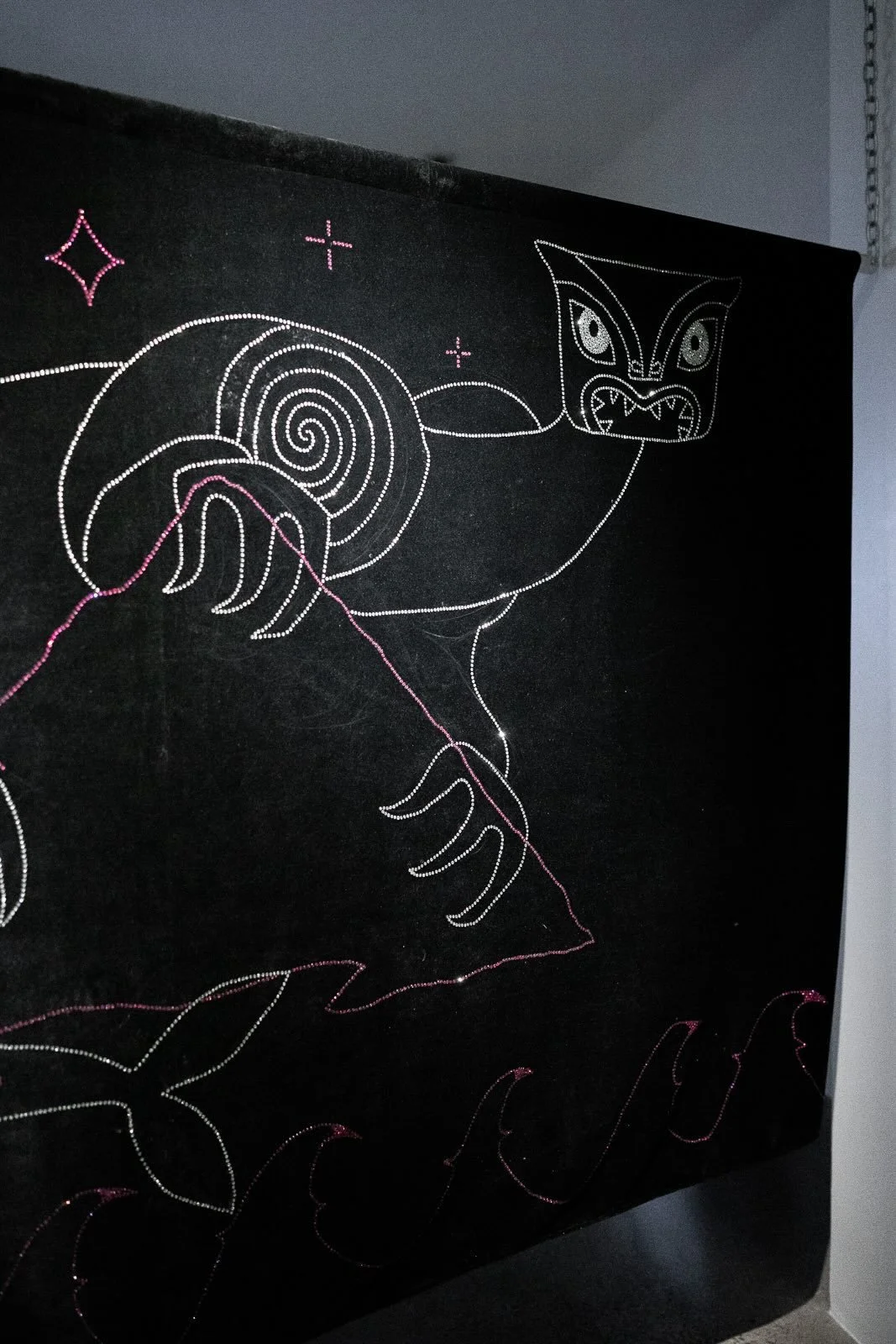
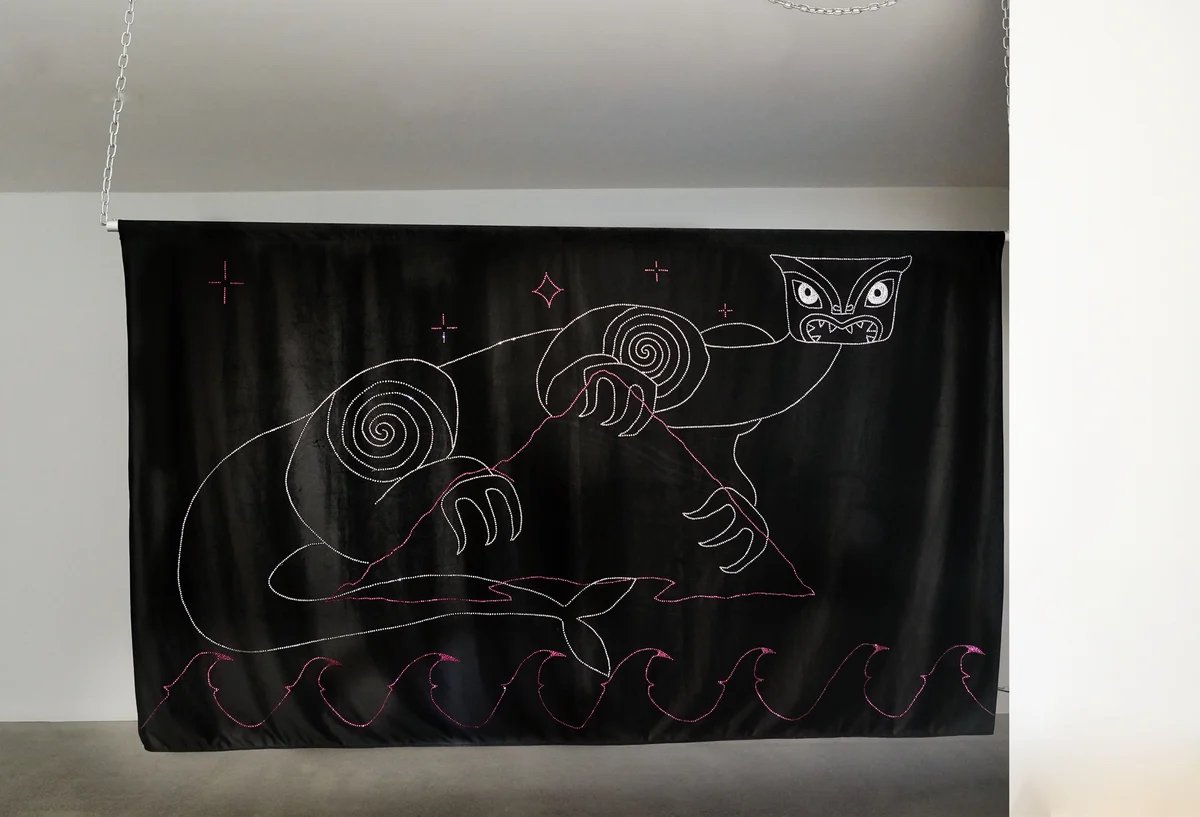
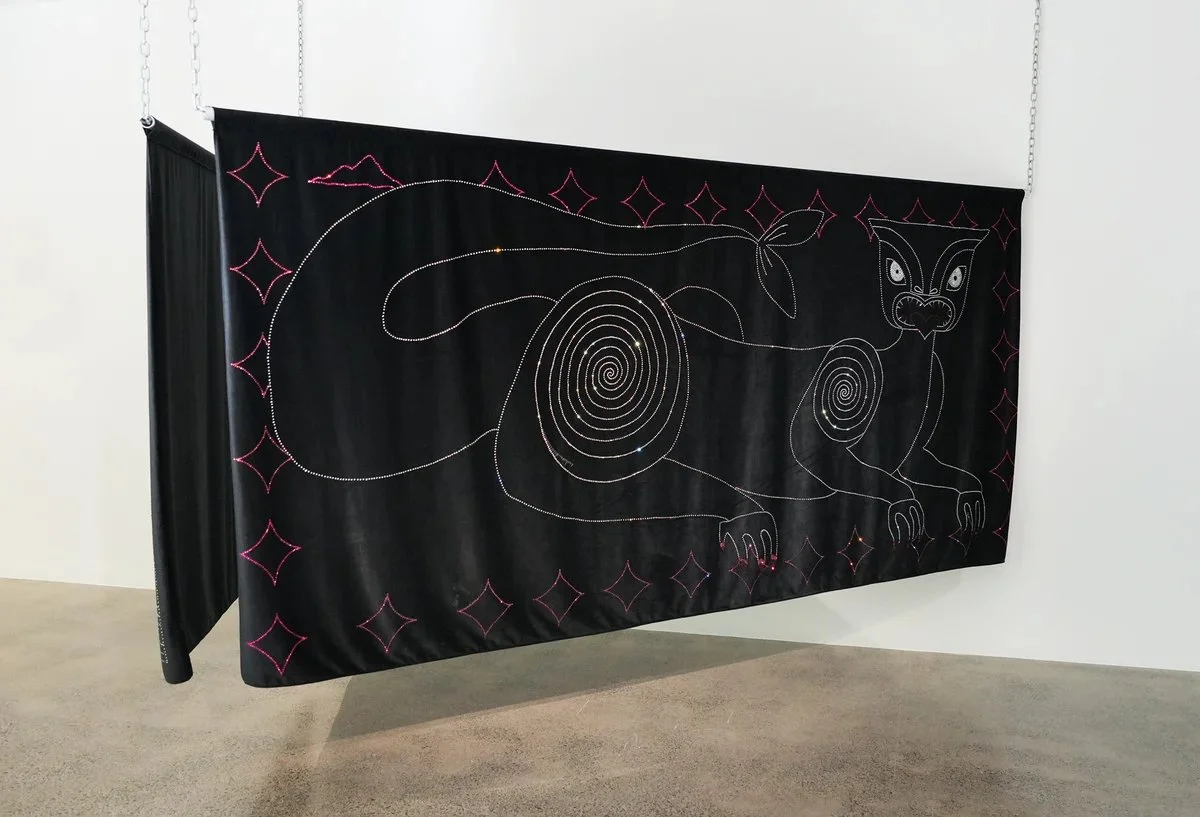
Kahurangiariki Smith’s (b.1996 Te Arawa, Tainui, Takitimu, Horouta and Mātaatua) practice explores taniwha as relational presences rather than fixed mythological figures. In this exhibition, taniwha are depicted as forms that emerge in response to emotional intensity, pressure and survival. They act as vessels for feelings that are difficult to hold – grief, fear, anger and endurance – shifting depending on circumstance and perspective. Rather than illustrating one historic taniwha directly, Kahurangiariki treats taniwha as living, adaptive forces that respond to contemporary experiences.
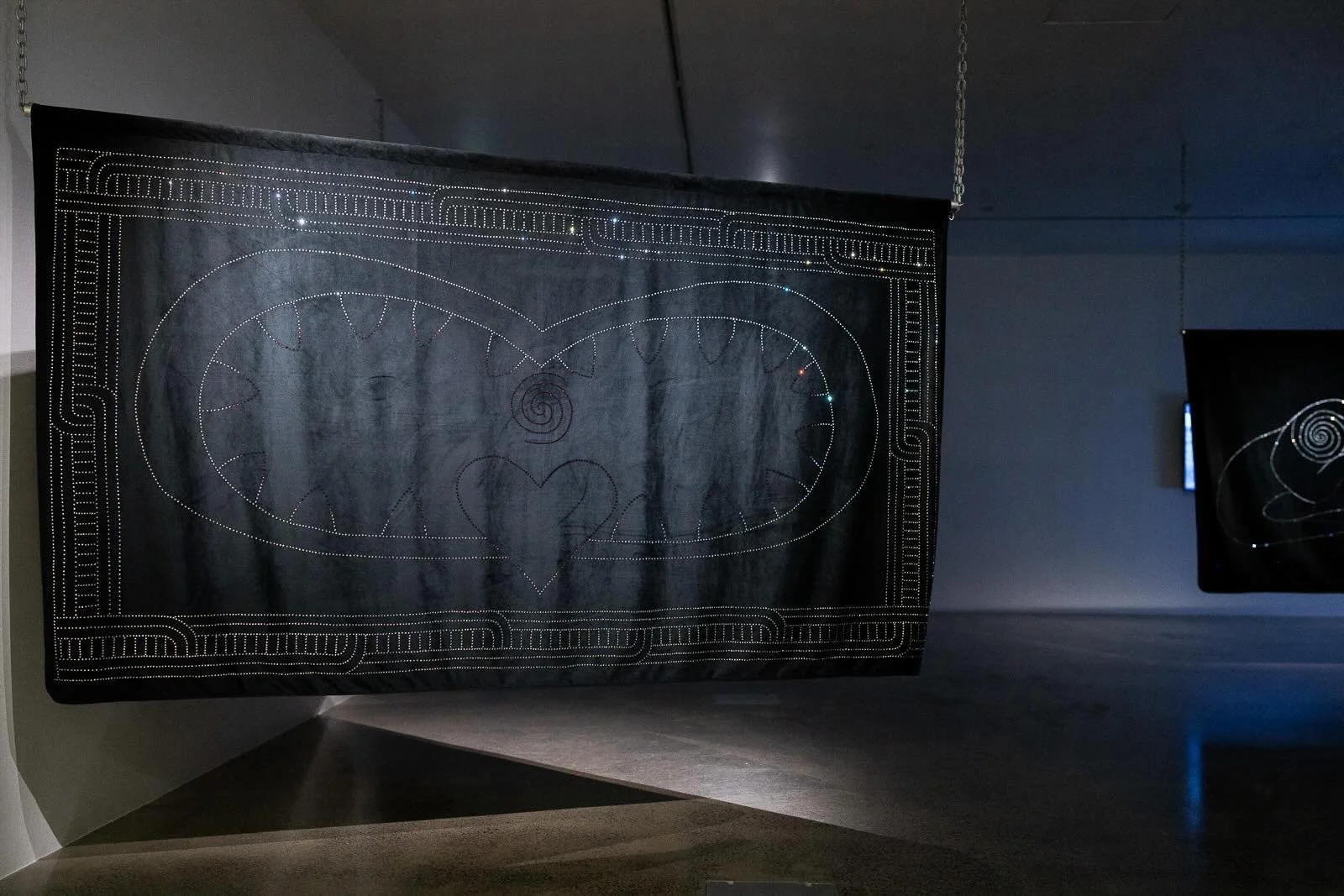
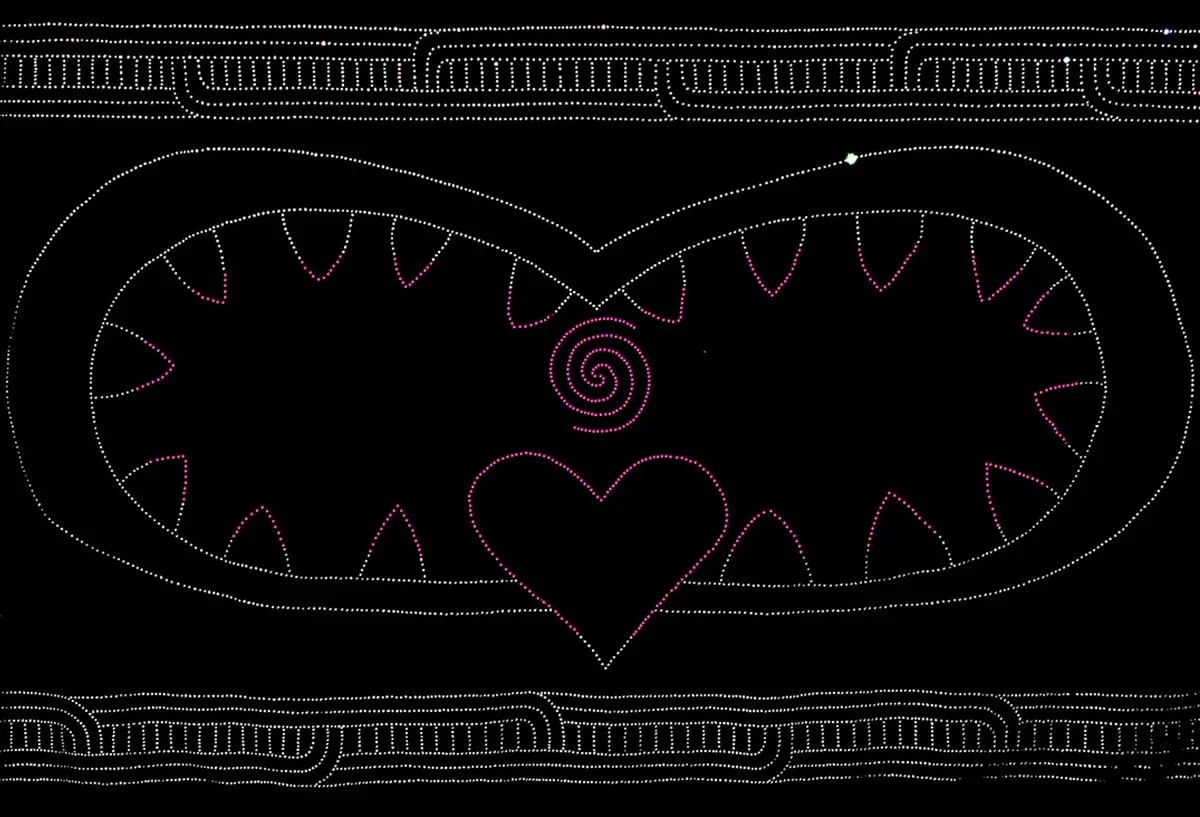
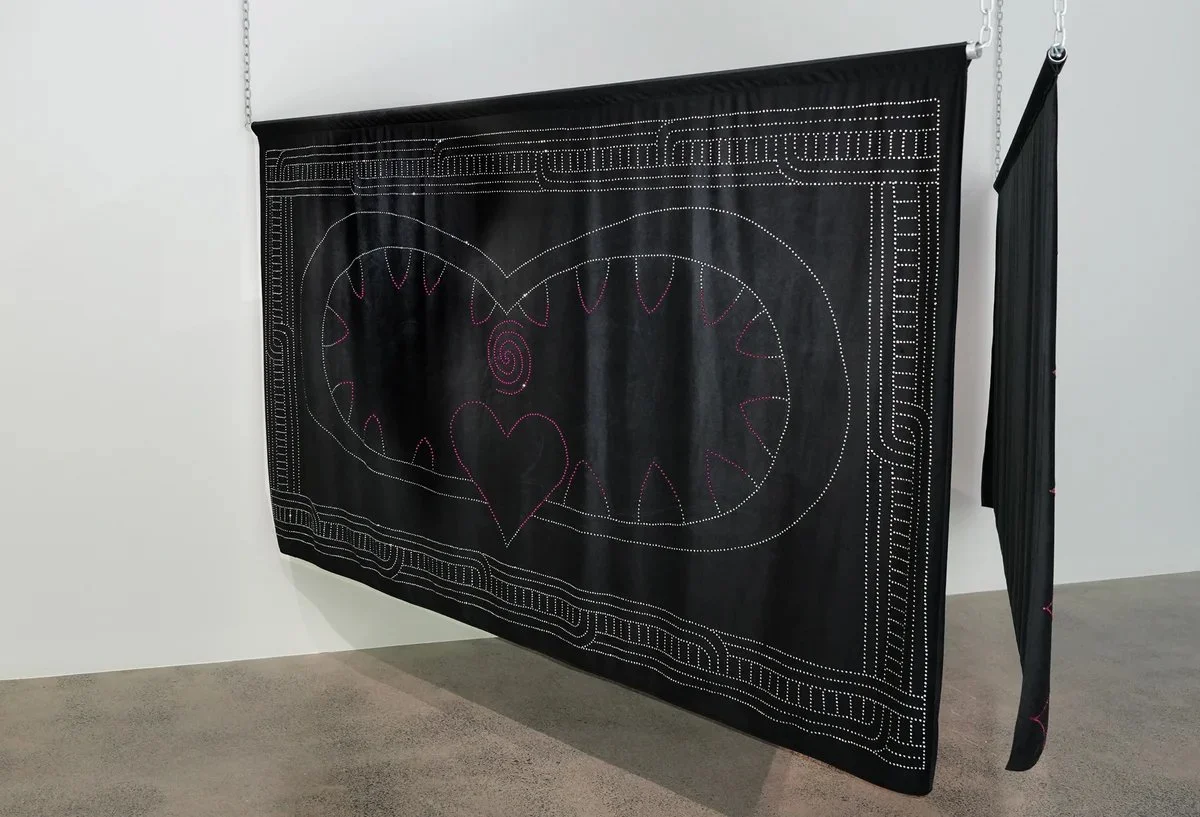
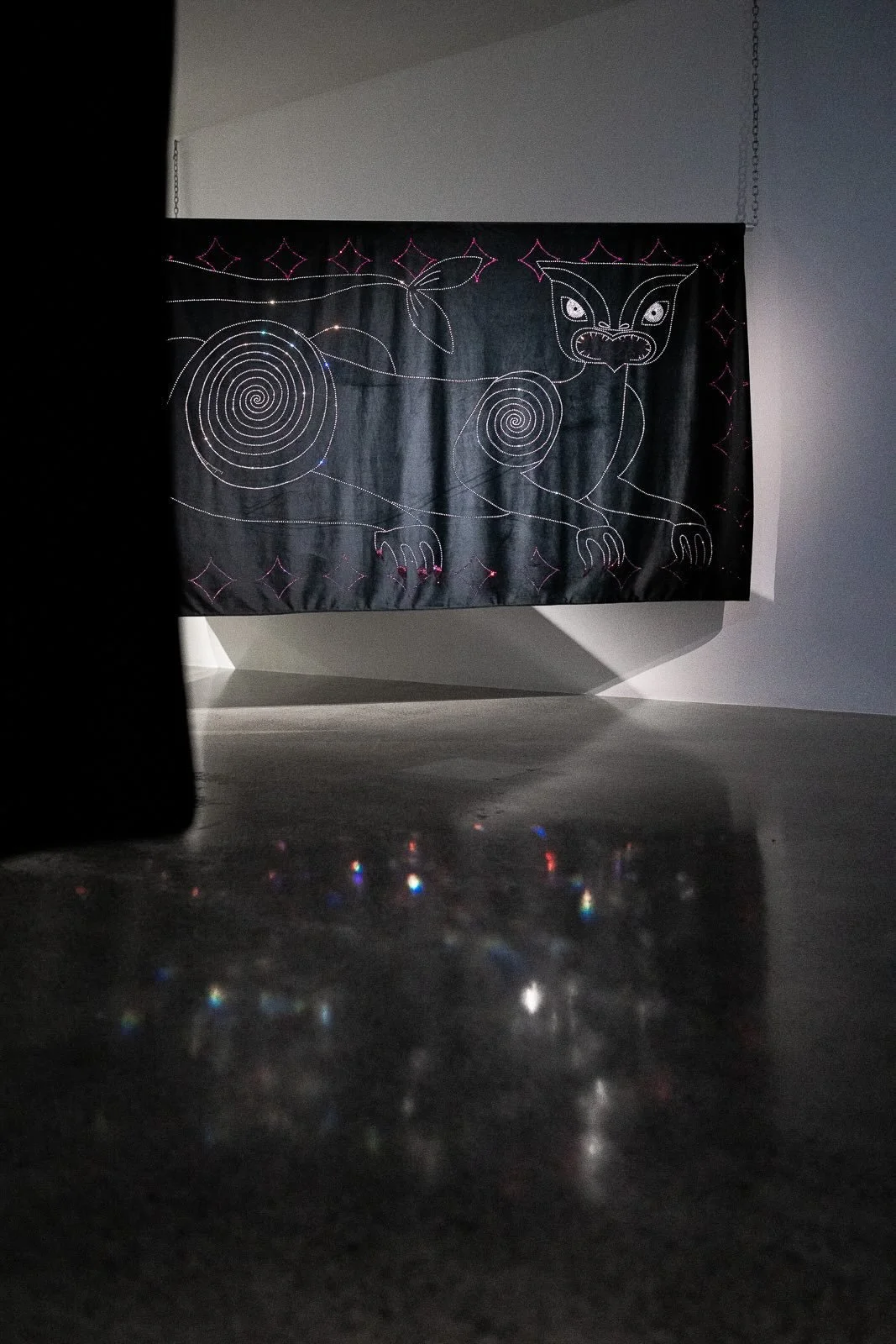
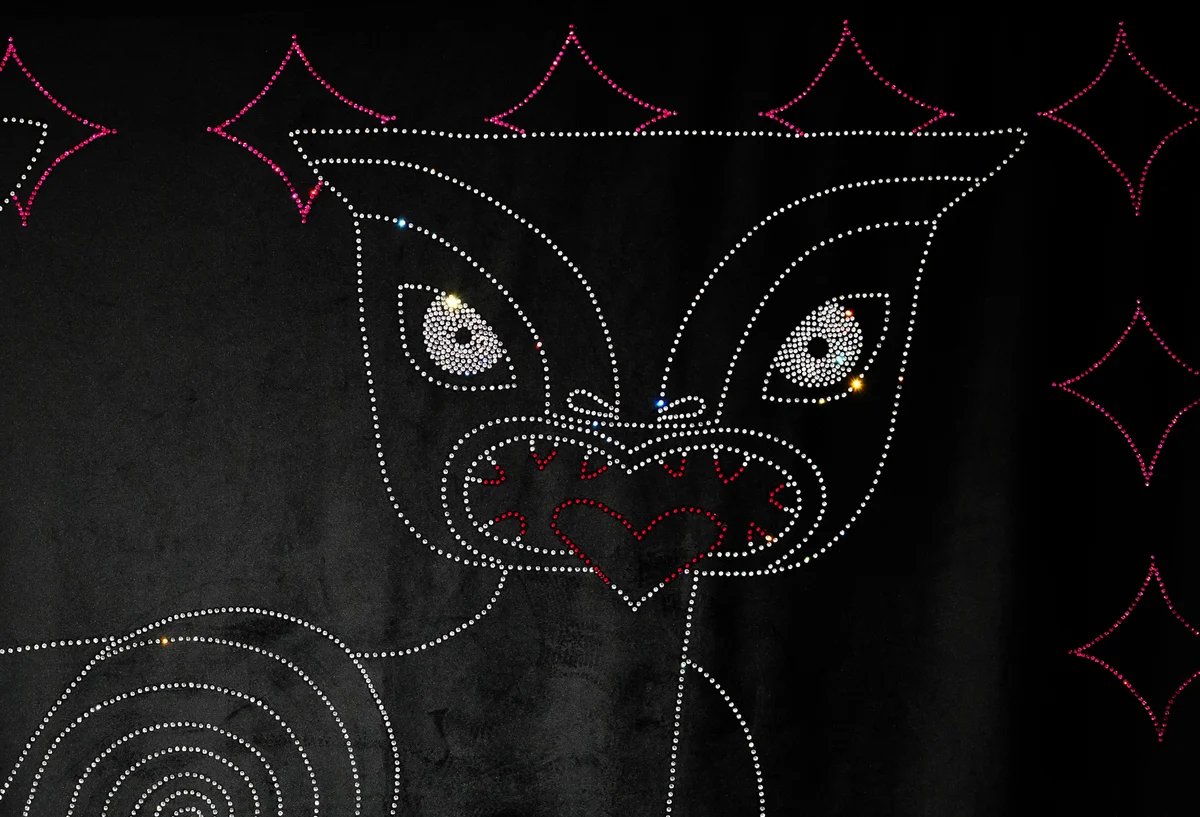
Materiality is central to this exploration. Kahurangiariki employs bedazzled velvet, rhinestones and soft, tactile fabrics, drawing on hyper femme and “Juicy Couture steez” riffing off the popular 1990’s and 2000’s hot-pink and bejewelled velour tracksuits. A multitude of rhinestones glitter starkly against the all-consuming
black velvet. There is an intentional juxtaposition of aesthetic principals, between the bedazzled surface and the patterns they form, which are typically found in whakairo. Often seen as a masculine art form, whakairo depicted in hyper femme velour presents a potentially challenging pairing. These works attract the viewer through sparkle and texture, while simultaneously confronting them with discomfort, rupture and intensity. Sparkle functions not only as decoration, but as a strategy masking, holding or amplifying what
lies beneath.
The materials Kahurangiariki uses are purposefully accessible and familiar. Rhinestones sourced through everyday online marketplaces, fabrics associated with Juicy Couture serve as a moment of understanding between artist and viewer. These choices resist distinctions between “high” and “low” art materials, asserting that complex emotional and cultural narratives can be carried through materials that are readily available and culturally coded as decorative or excessive. The slow, repetitive labour of bedazzling embeds time, care and endurance into the surface of each work, transforming ornamentation into something weighted and deliberate.
Previously Kahurangiariki had established the taniwha as a nurturing best friend and kai arataki (guide) through a journey of healing. In contrast, this exhibition positions the taniwha as an agent of utu, a concept in Te Ao Māori that that governs cost and reciprocity, and often is associated with revenge. The taniwha thus becomes a proxy capable of holding rage, fear and protective impulse on behalf of the artist, the viewer, and te taiao (the natural world). Violence is externalised and transformed, through the works, allowing it to be confronted, shaped and therefore survived. There is a notedly protective force behind the works – in the same way a taniwha can embody protector and monster, the artworks initially appear as a threat, but belie a promise as well: that all is indeed not right in the world, and we have always had the resources to deal with this.
Throughout Kai a te Taniwha, taniwha remain resistant to singular interpretation. They are neither purely protective nor purely destructive, but shaped by emotion, necessity and viewpoint. By pairing visceral imagery with softness, humour and iridescent abundance, Kahurangiariki creates a visual language in which glamour and brutality, fantasy and survival all coexist. Viewers are invited to sit with contradiction, recognising taniwha as emotional technologies, forms through which complex feelings, both individual & societal, are made visible.
Through this combination of material excess and emotional depth. Kahurangiariki’s practice insists on taniwha as living presences: responsive, contemporary and deeply entangled with the realities of feeling, embodiment and endurance.